CBD-Produkte: Hat Cannabidiol eine Wirkung?

Stand: 21.07.2022 07:52 Uhr

Das Cannabidiol (CBD) aus der Hanf-Pflanze wird als Wundermittel gegen Stress, Schmerzen und Krebs angepriesen. Doch die Wirksamkeit ist nicht nachgewiesen.

Anders als das Tetrahydrocannabinol (THC) der Hanf-Pflanze hat CBD keine berauschende Wirkung und macht nicht süchtig. Wie genau CBD wirkt, ist nicht bekannt. Vermutet wird, dass Cannabidiol die Wirkung anderer Medikamente verstärken kann. Außer positiven Erfahrungsberichten gibt es kaum Studien, die einen Effekt belegen.

CBD zur Therapie von Epilepsie und Multipler Sklerose

Als gesichert gilt der therapeutische Nutzen von CBD nur bei bestimmten Formen der Epilepsie. Seit 2019 ist es in Europa als Antiepileptikum (Handelsname Epidiolex) zur Behandlung von schweren, kindlichen Epilepsien zugelassen. Es wird davon ausgegangen, dass CBD die Kalziumkonzentration innerhalb der Nervenzellen verändert. Als Nebenwirkung können Veränderungen des Leberstoffwechsels auftreten, sodass die Leberwerte während der Behandlung mit dem Medikament regelmäßig kontrolliert werden müssen. 

Als zugelassenes Medikament unterliegt der Wirkstoff CBD in Deutschland der Verschreibungspflicht. Wegen seiner entkrampfenden Eigenschaften ist CBD außerdem Bestandteil des Wirkstoffs Nabiximols, der als Spray zur Behandlung von Krämpfen bei der Multiplen Sklerose zum Einsatz kommt.

Kann CBD Vermehrung von Tumorzellen hemmen?

Ergebnisse aus Tierversuchen deuten darauf hin, dass CBD bei bestimmten Krebsarten der Vermehrung von Tumorzellen entgegenwirken könnte. Die Studien zeigen, dass CBD in Kombination mit einer Chemotherapie die Überlebenszeit von Versuchsmäusen von 20 auf 22 Tage erhöht. Bislang sind die Untersuchungen aber noch Grundlagenforschung. Die Ergebnisse sind nicht auf den Menschen und aktuelle Krebstherapien übertragbar.

CBD in der Schmerztherapie

Untersuchungen an Tieren weisen auch darauf hin, dass CBD in der Palliativmedizin bei Beschwerden wie Schmerzen, Schlaflosigkeit, Angstzuständen und Depressionen eine unterstützende Rolle spielen könnte. Um diese Effekte zu bestätigen, müssen allerdings weitere Studien erfolgen.

CBD-Produkte ohne Wirknachweis

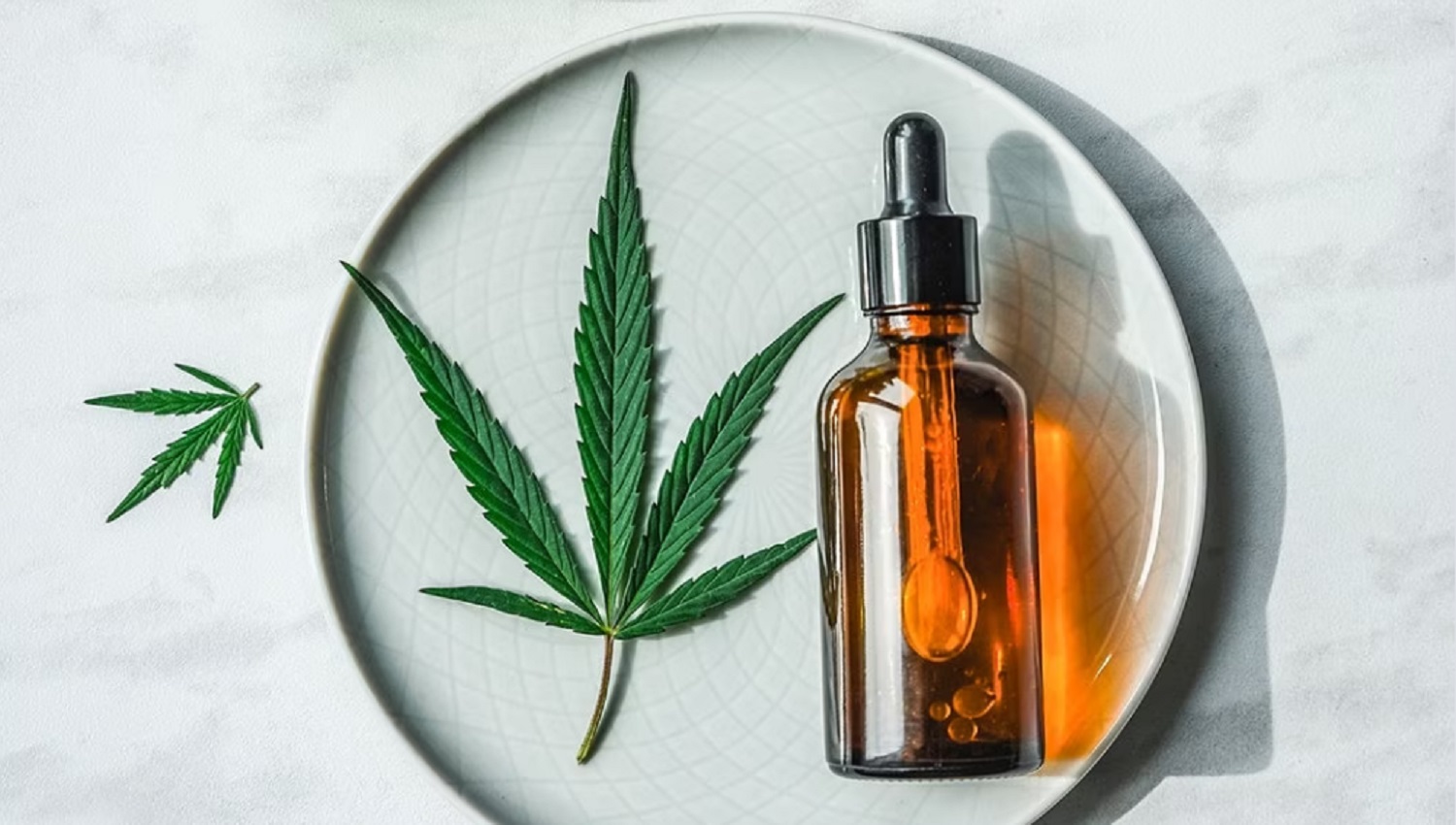
Frei verkäufliche CBD-Produkte aus dem Onlinehandel, aus speziellen Hanfshops, aus Drogerien, aber auch aus Apotheken sind keine zugelassenen Medikamente. Die Öle, Cremes oder Sprays dürfen derzeit jedoch nahezu ungeprüft als Hygiene- oder Kosmetikprodukte verkauft werden, ohne dass sie irgendeinen offiziellen Wirksamkeitsnachweis erbringen mussten. Nur der THC-Gehalt muss unter 0,2 Prozent liegen.

Als Nahrungsergänzungsmittel dürften CBD-Produkte nach Ansicht des Bundesamts für Verbraucherschutz und Lebensmittelsicherheit nicht in Verkehr gebracht werden, denn CBD hat auch keine Zulassung als “neuartiges Lebensmittel”. Zum Einnehmen dürften CBD-Kosmetik- oder Hygiene-Produkte demnach überhaupt nicht empfohlen werden.

CBD-Produkte nicht als Lebensmittel zugelassen

Sind CBD-Produkte zum Einnehmen vorgesehen, benötigen sie eine Zulassung der Europäischen Union als neuartiges Lebensmittel.

Die EU-Behörde für Lebensmittelsicherheit prüft mehrere Herstelleranträge, CBD als neuartiges Lebensmittel zuzulassen. Doch im Juni 2022 wurde das Verfahren vorerst gestoppt. Die Efsa (European Food Safety Authority) verweist auf potenzielle Gefahren und fehlende Daten, um festzustellen, ob Cannabidiol (CBD) als Lebensmittel sicher ist.

Hersteller versuchen Verkaufsverbot zu umgehen

Dirk Lachenmeier untersucht für das Chemische Veterinäruntersuchungsamt Karlsruhe CBD-Proben, die bei Lebensmittelkontrollen genommen werden. Er beobachtet: Einige Hersteller versuchen mit Tricks, das Verkaufsverbot zu umgehen. Sie deklarieren die Öle um, etwa als “kosmetisches Mundhygieneöl”. Es reiche aber nicht aus, die Produkte umzubenennen, erklärt Lachenmeier. Wenn ein menschlicher Verzehr eines CBD-Produktes vorherzusehen sei, gelte es damit auch als Lebensmittel.

Viele CBD-Produkte enthalten mehr THC als erlaubt

Lachenmeier stellt außerdem immer wieder fest: Zahlreiche CBD-Produkte enthalten mehr THC als erlaubt, könnten also doch berauschend wirken. In einigen Fällen könne laut Lachenmeier sogar ein Drogenurintest positiv ausfallen. 2020 beurteilte er insgesamt mehr als hundert CBD-Produkte in Baden-Württemberg als nicht verkehrsfähig. Oft wehren sich die Hersteller juristisch. 50 von ihnen haben bei der Europäischen Union eine Zulassung als neuartiges Lebensmittel beantragt.

Stiftung Warentest: CBD-Produkte keine harmlosen Pflanzenstoffe
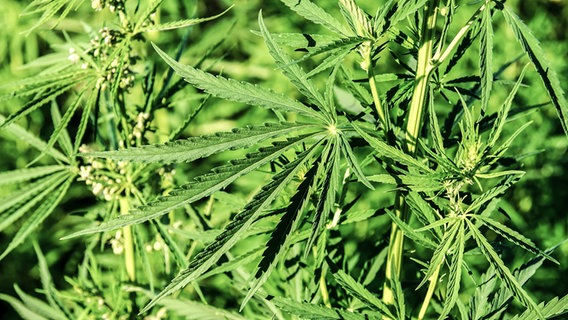
Hanfpflanzen © Colourbox Foto: Mykola Mazuryk

Hanf: Vielseitige Nutzpflanze für die gesunde Küche

Die Nutzpflanze wird zur Herstellung ganz unterschiedlicher Produkte genutzt. Vor allem die Samen gelten als äußerst gesund.

Ärzte und Verbraucherschützer warnen weiterhin vor CBD-Produkten und halten sie für bedenklich. Stiftung Warentest untersuchte 17 verschiedene CBD-Produkte. Im Interview rät Redakteurin Nicole Merbach klar davon ab, CBD-Produkte einzunehmen. Anders als sein Image sei Cannabidiol nicht als ein harmloser Pflanzenstoff einzustufen. Es handele sich vielmehr um eine pharmakologisch sehr wirksame Substanz, die im Körper wie ein Arzneimittel wirken könne.

Hanfsamen im Müsli, Hanföl im Salat

Lebensmittel aus der Hanfpflanze, deren Verwendung für die Küche schon vor 1997 dokumentiert ist, fallen nicht unter die Novel Food Verordnung. Produkte aus Cannabis sativa L.-Pflanzen oder –Pflanzenteilen, wie Hanfsamen, Hanfsamenöl oder Hanfsamenmehl sind weiterhin zugelassene Lebensmittel. Die Samen haben einen nussigen Geschmack und wertvolle Omega-3-Fette, sind aber teuer, wohl auch, weil Hanfprodukte so sehr in Mode sind. 

Quelle : https://www.ndr.de/ratgeber/gesundheit/CBD-Produkte-Hat-Cannabidiol-eine-Wirkung,hanf188.html
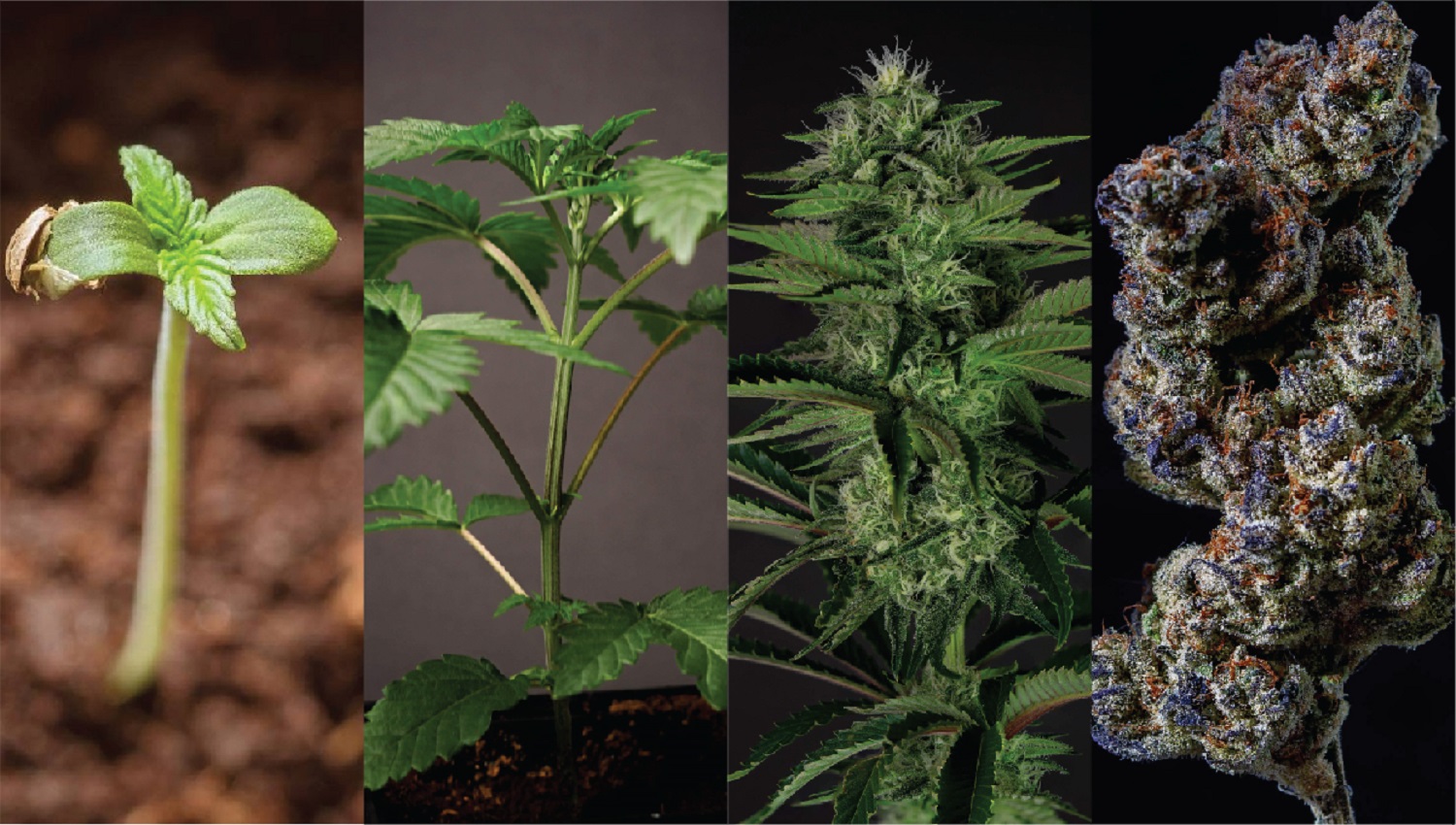
THE STAGES OF CANNABIS GROWTH

Cannabis growth is made up of a series of stages that plants undergo during their lifecycle. Each stage during the cannabis cultivation process requires its own unique demands, including different levels of light, water, and nutrients. It can take anywhere from 4 to 8 months to grow a cannabis plant, this varies based on where you’re growing. With an indoor grow room, you have total control over environmental conditions and your plants are able to flower after only a few weeks!

The quality of your plant depends on your knowledge of the cannabis growth stages and the lifecycle of your plants. Grow room air filtration protects plants throughout each stage of growth, providing mold and bacteria prevention, putting a stop to stagnant air, and producing clean, filtered air 24 hours a day.

Utilizing grow room air filtration is the process of drawing in and capturing airborne contaminants and other grow room threats by using a specialized filtration system and filter media. When you implement air filtration while cultivating cannabis, it ensures that plants are given the ultimate in clean air from the first stage of germinating seeds to the last stages of harvesting, drying, and curing.

Before we dive right into the different cannabis growth stages, let’s cover a few important details about cannabis seeds. You may have heard the very common question, can you tell the sex of a cannabis seed?” While there’s currently no way to determine the sex of a seed by examination, there are companies that produce feminized seeds which are bred to provide a 99.9% chance of growing female.

Cannabis seeds remain inactive until they are exposed to water and light. They are relatively strong and survive well in dark, cool places such as refrigerators. It’s important to note that if temperatures are too low or fall below freezing, cannabis seeds can become damaged or die. Cannabis plants are generally dioecious meaning that male and female reproductive organs are in separate individuals. However, sometimes cannabis plants demonstrate intersex characteristics and are referred to as hermies.

Females are the only cannabis plants with the ability to produce buds that can be harvested to smoke, vape, dab, and ingest. Male plants and hermies must be removed before the flowers open to ensure that your cannabis retains it is quality and remains free of seeds. When male or dual-sex plants grow together with females, they pollinate them causing the females to stop using their energy to feed buds and start focusing on producing seeds which results in reduced and sometimes ruined bud harvest.

Now that there’s a more clear understanding of cannabis seeds and how to properly care for and maintain, lets talk about the stages of cannabis growth!

Cannabis Growth Timeline

1. Germinating: 1-7 days
2. Seedling: 2-3 weeks
3. Vegetative: 2-8 weeks
4. Pre-Flowering: 1-2 weeks
5. Flowering: 6-8 weeks
6. Harvesting

1. Germinating Seeds
To effectively germinate, you must ensure that seeds are mature enough. If your seeds are immature they will likely not germinate.
If your seeds have reached maturity they will appear shiny and light to dark brown and will be dry and hard to the touch.
If your seeds are underdeveloped they will feel soft and appear white or green.
To germinate, keep your seed in a wet, dark place. Some growers may keep it in a cup of water or wrapped in a wet paper towel and set inside of a cabinet.
Exposing seeds to light and moisture stimulates hormones and gives the growth process a boost.
A single root, called the radicle, will shoot downwards as the new stem grows upwards pushing the seed out of the soil.
Unlike common marijuana leaves, two rounded cotyledon leaves will sprout from the stem as the plant breaks away from the seed’s protective casing.
These cotyledon leaves gather energy from sunlight so that the plant can become stable and grow bigger. Once the roots develop, the first true leaves grow and the plant is not in its seedling stage.
2. Seedling Stage
The seedling growth stage is fragile and plants must receive 18-24 hours of sunlight, moist soil, and mild humidity to grow rapidly.
Because the seedling has such a small root system, it’s important to not drown it by overwatering.
Once a plant becomes a seedling, it will develop more traditional-looking cannabis leaves.
A marijuana leaf is made up of anywhere between 3 to 13 fingers. The leaves produced from a sprout will appear with only one rigged finger. With new growth, marijuana leaves will develop more fingers. Mature marijuana plants will typically have between 5 and 7 fingers per leaf but can reach up to 13.
The first fingered leaves can grow up to 4 inches above cotyledon leaves and will have the notorious serrated edges. This set of leaves grow in pairs on opposite sides of the stem.
Cannabis plants are treated as seedlings until they develop leaves with a full number of fingers.
Healthy seedlings should be short with thick vegetation and their leaves should appear vibrant green in color.
During this stage, growing environments must be kept clean and free of excess moisture to ensure the plant does not become diseased or moldy.
3. Vegetative Growth
Once a seedling develops 7 sets of pointed leaves, it enters vegetative growth.
After being relocated to a larger pot, the growth of a cannabis plant soars. It’s stem become thicker and grows taller, it produces more leaves, nodes, and branches, and its root system becomes more established to prepare for flowering.
This is the stage where growers will begin topping and training plants.
The spacing between nodes displays what kind of cannabis you are growing. A node is where any two branches intersect off the main stalk. When a plant is young, nodes develop in pairs. When a plant has matured nodes start to alternate. They still develop in pairs but there is more distance between them and branches are no longer parallel to one another.
There are also secondary nodes on branches that have developed from the main stalk.
Sativa plants are lanky and don’t have as many leaves while Indica plants are shorter and denser.
During the vegetation stage, it’s important to increase water to aid in the plant’s development. As your plant grows larger and the roots grow outward, it’s better to water farther away so that the tips of the roots can more easily absorb it.
During this stage your plants need an increase in warm water, a flow of moist air, nitrogen and potassium-rich nutrients, and a lot of soil space to allow them to grow 2-3 feet tall.
Similar to the seedling stage, during vegetative growth, cannabis plants should be in well-drained soil. It’s important to let the plants dry out between watering to ensure they do not drown.
The growth of the plants is based on the rate leaves gather light and transform it into photosynthesis.
For indoor grow rooms, plants should be kept on an 18-hour day light cycle with a 6-hour night period. You can keep your plants on a 24-hour light cycle but plants tend to do better when given breaks and it will save you some money.
Fun fact: Since light cycles control when a plant goes from the vegetative stage to flowering, they can be kept in vegetation forever. This is a tactic used to skip the germination stage and grow plants from cuttings.
4. Pre-flowering
It can take anywhere from 7 to 14 days for a plant to enter the pre-flowering stage. Once it does the sex can be determined by the pre-flower found at the nodes. It becomes easier to figure out the sex when the plant goes deeper into vegetation.
How to tell if your plant is a male or femaleFemale: Two pistils (the pistil contains the reproductive parts of a flower) will be growing on the buds (flowers grow above these leaves, one cluster on each side).Male: Small green sacs full of pollen will be seen on the node areas.
Once the sacs on a male or intersex plant burst, the pollen can fertilize the cola of nearby females ruining the psychoactive potential of their trichomes (small glandular hairs). This is why it’s critical for male and intersex plants to be removed before flowering.
Since Hermies have both glands and leaves (the reproductive organs of a cannabis plant), they can pollinate themselves and ruin your harvest. You must remove and destroy all intersex plants because of this risk.
A cola is the flowering site on a female cannabis plant where flowers grow together tightly. This is also known as the terminal bud. Healthy plants typically form one main cola from the center of their structure and smaller colas form on the outside of the plant. Trimming and training are used to increase the number of large colas a plant will form.
Non-pollinated female plants produce Sinsemilla, they have no seeds and produce more cannabinoids. Sensimilla has an exceptionally high concentration of psychoactive agents and is responsible for effects like talkativeness, increased sociability, euphoria, the munchies, and hallucinations. These plants produce large volumes of resin and fake seed bods both containing high levels of THC.
Sinsemilla is identified by the white hairs that sprout from the bracts at the plant’s nodes.
Once the plant starts receiving less light per day (from 18 to 12 hours), its growth will halt and it will enter the flowering phase.
5. Flowering
The flowering stage occurs naturally when plants receive less than 12 hours of light a day. For cannabis to completely enter the flowering stage it requires periods of 10 to 12 hours of complete darkness.
You will know that your plant is ready to be harvested when the colors of the pistils on cola buds turn from white to reddish orange and the trichome heads turn from transparent to milky to opaque and finally amber.
The amber color indicates a higher CBD to THC cannabinoid ratio in its resin.
Trichomes produce THC, terpenes, flavonoids, and other cannabinoids. As flower clusters develop more cannabinoid compounds develop and the clusters become sticky from resin.
In the flowering stage, cannabis plants enjoy warm weather, medium humidity, and benefit from intermittently receiving blooming nutrients.
If you notice that the trichomes fell off, you let the plant grow too long and most of the cannabinoids are gone meaning you won’t get the THC or CBD effects and will have to start over with a new batch.
Trichomes turn from cloudy white to brown once THC begins to weaken. While having some brown trichomes is okay, its a sign that the plant is ready to be harvested.
It’s recommended to harvest once half the trichomes are opaque. It’s believed that this method produces the highest amount of THC and the lowest levels of CBD.
Another way to determine if your plants are ready for harvest is by checking the color of the hairs that grow inside of the pistils or calyxes.If there is a high color ratio of white to red pistils your cannabis will provide a euphoric THC high.If the color ratio is more red to white, your cannabis will provide a calmer, CBD-stoned feeling.If you harvest once half the trichomes are opaque and the pistils haven’t turned brown, your cannabis will provide a balanced THC/CBD high.
6. Harvesting
Once it’s time for harvest, the cannabis plant should be cut down into smaller branches to ease the drying process. When the plant is cut into small sections, the pieces should be strung and hung upside down in a cool, dark room.
Commercial cannabis is typically dried by applying a humidity level of between 40 and 50%. The plants should remain hanging for 7 to 14 days.
Drying is necessary to prevent fungus and bacteria from growing. By removing moisture, you can effectively preserve the life of your cannabis. Completing the drying process too quickly will result in harsh cannabis.
The curing process is optional and involves aging cannabis in sealed, airtight containers (generally mason jars) and placing them in a cabinet where temperature levels remain between 50 and 60 °F.
To avoid a decrease in airflow, jars should not be packed tightly. They must remain stored for 1 to 3 weeks and opened briefly once a day to release any buildup of gases while absorbing the fresh air.
It’s believed that curing improves flavor and burn quality, and reduces the harshness.

Cannabis plants that are cultivated indoors are easily impacted by even tiny fluctuations in climate. Indoor grow rooms and facilities that don’t implement air circulation can experience stagnant air pockets, rapid humidity changes, and CO2 depletion. Grow spaces with uncontrolled humidity are at a higher risk of mold, mildew, and pest infestation while CO2 depletion can result in a nutrient lockout.

Quelle: http://cleanleaf.com

Bild : https://growdiaries.com/journal/the-life-cycle-of-a-cannabis-plant-from-seed-to-harvest